The European landscape of social media platforms
An overview of the most discussed social media platforms launched in Europe, or with their infrastructure hosted in Europe. I discuss about Mastodon, Eurosky, Monnett, eYou, and others.
Over the last year, the European social platform space has started to get more crowded. Historically, most of the world adopted the Silicon Valley main platforms because they were easy to use, they used the “first mover” advantage, and they had aggressive promotion tactics.
The political and societal changes in the United States have raised the question of “digital sovereignty” in the European Union. What will happen with the data, moderation decisions, and which laws will take precedence over the Terms and Conditions of the platform where you are posting and commenting every day?
It’s in this context that the European platform ecosystem has started to look interesting with initiatives that can cover most of what we’ve known until now.
Mastodon

Mastodon is probably the oldest European platform that focuses on microblogging. It launched in 2016 and was created by Eugen Rochko as an alternative to Twitter. It’s powered by ActivityPub, the open standard protocol for decentralised social networks. Based on this protocol, Mastodon can communicate with a lot of other apps: Peertube, a video-focused network; Pixelfed, an image-focused network; Bookwyrm, a book-focused network; and others.
This whole ecosystem is called the Fediverse. And the Fediverse is made up of instances. For example, a university creates a Mastodon instance (a server) where all faculty members host their profiles and data. Another university does the same. I host one Mastodon server for myself and my friends, and I have another Bookwyrm server. Because these instances communicate with ActivityPub, I can see what the university people are posting, they can see my activity, and we can interact with each other. This is the Fediverse: a network of servers that communicate with each other, where the control (of the content, data and infrastructure) is decentralised.
This openness fosters a lot of creativity and experimentation. For example, to access Mastodon, you can use their official mobile apps, use the website as a PWA (progressive web app), or use a community app like Moshidon or Tusky for Android, or Ivory or Mona for iOS.
Eurosky
Eurosky is a project started by The Modal Foundation to create a European alternative to Bluesky. Bluesky, Eurosky, Blacksky, and others are powered by the AT Protocol, an open standard for social networks. It has a modular architecture, but it’s not a fully decentralised network like ActivityPub. To be part of the Atmosphere (the name for the whole ecosystem that runs on the AT Protocol), one needs to host all the information of the network for that node to work.
Like ActivityPub, the AT Protocol is starting to have new apps and experiments. The team behind Eurosky created Mu social, a microblogging social media interface for the protocol.
Sebastian Vogelsang, Co-Founder of Eurosky, said: “mu is a canvas built for experimentation to bring new, delightful experiences to people. We are starting with microblogging as a social medium, and we will expand from there. At launch, we are introducing several features that improve user experience, such as a user-customizable news feed from credible news sources, post editing and a new system to democratize account verification. We are building mu with some of the most talented developers in the open web ecosystem. Expect to see new features popping up every week.”

Miscellanea is the newsletter for the independent thinker, at the intersection of digital content, information management and culture. Created by Daniel Prindii, a content strategist & art historian.
Subscribe. (Free, with no spam).
Sifa.ID
Sifa.ID is an app, part of the AT Protocol, which offers a LinkedIn-like alternative that creates a professional profile with work history, education, and volunteering. Also, it aggregates a digest of your activity across the Atmosphere. You can follow people, ask and offer endorsements. Because most of the AT Protocol activity is public by default, an app like Sifa can act as an identity validator, without needing to check for government-issued IDs.

Monnett
Monnett is a European alternative to a photo-sharing social network. It has a chronological feed and a few features to customise your feed: the distance from which the content will reach you (local, national, global) and the type of content (life, sports, news, learning).
Until now, the beta version has attracted around 80k people from Europe and the United States. They say that they are not using LLMs to categorise posts, create hyper-targeted profiles, and won’t accept AI-generated imagery on the platform.
I’ve been testing it for around three months, and I’m impressed by the diversity of photos people are sharing: cats, dogs, weird shopping snapshots, image quotes, artists sharing their work, and the occasional political content-farming messages. To enjoy Monnett, you need to curate your feed: follow people, mute accounts you don’t like, report the things that don’t need to be on the platform. I think they could improve the app if they will launch searchable tags so that you can follow hashtags and topics. They could include some limits on the number of tags one can add to a post to minimise hashtag hijacking.

BeReal
The French social media app was launched in 2020 by Alexis Barreyat and Kévin Perreau. The main feature is that you have a two-minute window to post. Every day, the app notifies people when the post window will open, and they need to post images or videos from both cameras. It pushes people to be more spontaneous and natural.
After a peak of around 73 million users, the app had around 23 million users in 2024.
As I’m not a great snapshot sharer, I did not test it.
eYou
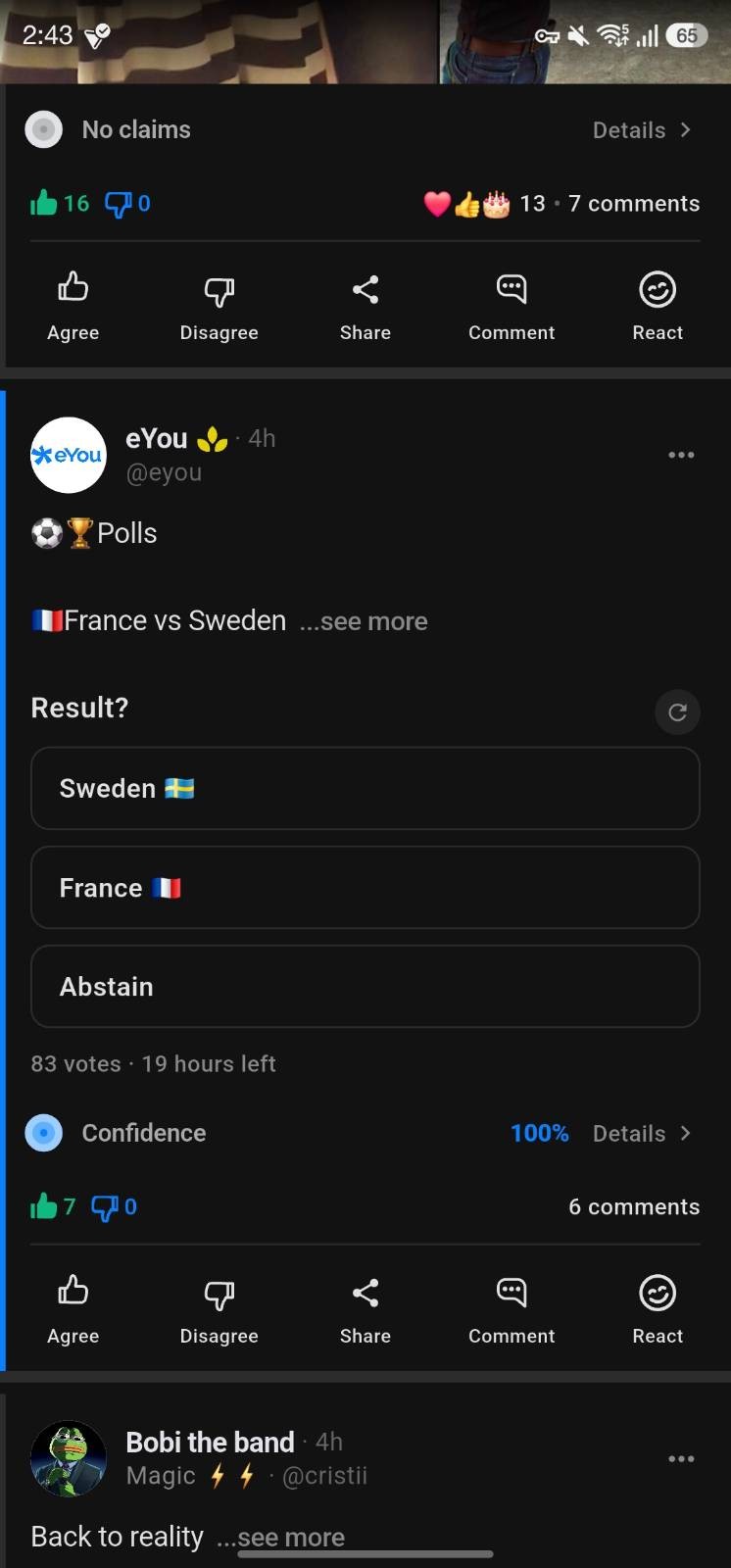
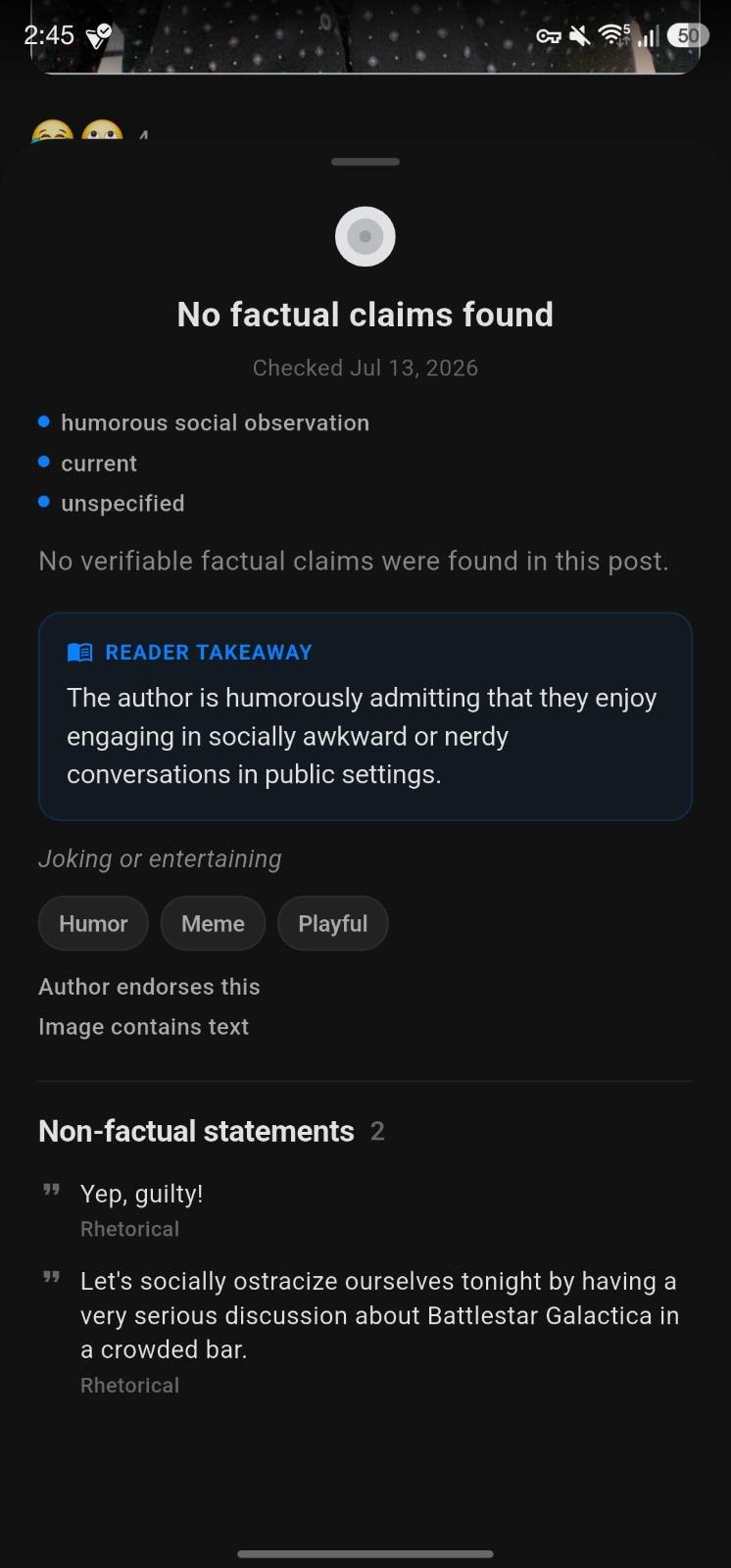
Recently launched eYou is a new European social network, created by two French serial entrepreneurs. Registered in Croatia with offices in Romania, it has embedded a real-time fact-checking AI system that will scan the post and the web to verify the information. They have created 24 custom feeds focused on topics for pets, wildlife, science, and others. Their custom feed for the Tour de France is the only place on all platforms where I stumbled upon cycling information.
In a The Next Web article, Grégoire Vigroux, co-founder and CCO, said: “Unlike traditional social networks that amplify engagement at any cost, eYou has been built to prioritise trust. Social media was originally meant to connect people and democratise information. But over time it has also become a powerful engine for polarisation and misinformation. We believe there is a real need and urgent demand for a new type of platform built around transparency, accountability and trust.”
I have created an account in the first beta batch of people. The app has an early Facebook vibe, with people sharing personal updates, lots of images, quotes, and bad humour. As the team is in Romania, the feed gravitates towards Romanian content, but I found content in German, French, and English. You can find the occasional AI-generated image, which should have a tag saying it's AI-generated. Or, better yet, have an update to the Community guidelines to eliminate them.
Their interface is probably the most complicated social platform interface. On eYou, you have buttons for: “thumbs up”, “thumbs down”, a button for comments (which will show the total number of comments), a button for reaction emojis (with the total number of them), a button for factual checks and a share icon. All the reactions will be shown on top of this line of buttons. Kinda a lot, don’t you think?
They still have to work on their fact-checking system, because it still has false positives, and the whole “AI speak” is horrible.
Wedium
Wedium is a short-form video social network with an algorithmic feed without bots, fake news, or identity checks. Its focus is on brands, creators, and media outlets. They have all their infrastructure hosted in Europe, collaborate with WebID from Germany for identity checks and claim that “the underlying code is also purely European and tailor-made”.
Their website mentions 15k people on the waitlist. On their social accounts (Instagram, TikTok and LinkedIn), they communicate mostly in German.
They have a team page on their website, with names and roles, and have mentioned that they host their infrastructure in Europe.
The code is not open-source, and we don’t have audits or analysis about their system. Plus, in their FAQ, they have this line “we deliberately decided against an open-source solution, especially after Trump used Mastodon’s code for his Truth Social”. How I’m reading this is that they don’t truly understand what open-source means. Open-source means community, inclusivity, transparency, open exchange and an alternative to big tech/walled systems. The fact that Truth Social violated the AGPLv3 license is not the fault of the open-source community. Truth Social would’ve copied or coded something anyway.
The fact that you say that you want to offer an alternative, that alternative should not be another closed and opaque system.
W Social
W Social appeared in my news feed at the Economic Forum at Davos. They hosted conversations there, promoting and explaining the app. Like Wedium, it has identity checks via its third-party app, called W Identity. It’s based on AT Protocol but recently closed its source code. The launch wasn’t without incidents: for a few days around Davos, a lot of online posts claimed that the European Union was launching its own social platform, information picked up by news websites. The error wasn’t corrected by Wsocial, but fact-checked by Euronews ten days later.
They weren’t transparent with their use of the AT Protocol from the start, and more recently they appear to have technical problems with the communication between their instance and the rest of the AT Protocol network. The Italian filmmaker and activist Elena Rossini has a deep dive into all the problems and inaccuracies of W Social. And EuObserver has an opinion piece from Alejandro Tauber on how the European Union supports open-source technologies, but moves its social accounts to W Social, a private company.

What should I choose?
With all these choices, the next stage is decision fatigue. What should you test? Should you tell your friends? Should you make a fun contest with them and test them out together?
What would I do if I could test them again today:
Has potential to attract interesting people, or has it gotten to a point where it can survive in the long term? Can you bring your friends and have fun?
See if our values align: open-source, no AI, robust moderation mechanisms
Openness of the platform, because I don’t want another walled garden (See my post about walled gardens). Can I self-host it? Can I connect other platforms to the social graph? Can I access it with an API?
How easy is it to use? Does it have dark patterns or complicated flows? What kind of engagement does it reward?
In the end, it depends on your energy, what’s important for you, and how much you want to have an alternative to the Big Tech platforms.
Main image via Fortepan / Aradi Péter / Szenczi Mária, Boulevard des Capucines a Place de l'Opéra felé nézve
Tagged
You might also like
-
A community of blogrolls
- Written by Daniel Prindii
- Published on
-
How raffles can help your marketing strategy
- Written by Daniel Prindii
- Published on
-
Is it meta to think about a super app?
- Written by Daniel Prindii
- Published on


